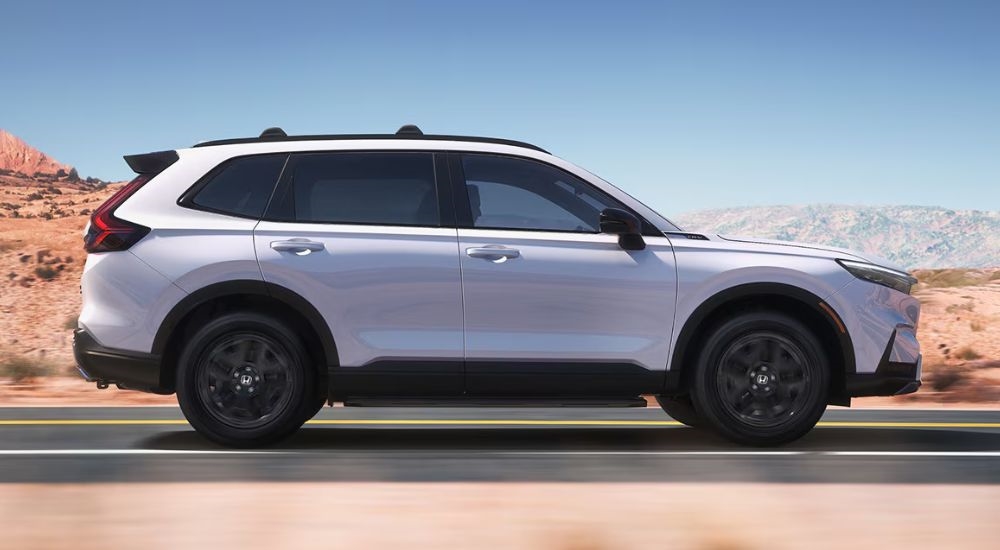
In today’s competitive compact crossover segment, it’s all about the details. Most of today’s small SUVs offer a similar slate of turbocharged engines, comfortable cabins, modern convenience, and infotainment technology, but dig a little deeper and you’ll find some key differences.
Just take the 2026 Honda CR-V vs 2026 Nissan Rogue, for example. While they might fall into the same category, the two SUVs take very different approaches to what buyers actually get for their money.
The sticker price is an important part of the equation when choosing a new or used vehicle, but ultimately, it’s an SUV’s standard equipment, cargo space, safety tech, and performance that have the biggest impact on a day-to-day basis.
So how do the 2026 Honda CR-V and 2026 Nissan Rogue compare when it comes to these all-important attributes? Let’s take a closer look at the two compact crossovers and learn which one delivers more value for today’s SUV buyer.
Space & Versatility
We’ll start with one of the 2026 CR-V’s most obvious advantages. Despite its designation, the compact crossover is refreshingly roomy, with every trim offering 76.5 cu.ft. of maximum cargo space. That figure easily places the CR-V toward the top of its class, with only the Hyundai Tucson offering more room.
The 2026 Rogue doesn’t trend too far behind, at 74.1 cu.ft, but it’s a different story when it comes to accommodating both cargo and passengers. When the second row is occupied, the Rogue's total storage space shrinks to just 36.5 cu.ft, versus 39.3 cu.ft in the CR-V. This makes the Honda a more practical option for those who prioritize versatility—and the same goes for comfort.
Honda’s SUV is designed with a spacious interior that’s big enough for the whole family. The front row offers an extra 0.2 inches of legroom when compared to the Rogue, but it easily bests Nissan’s model in terms of headroom with almost three extra inches. This allows the CR-V to easily accommodate taller drivers, who might feel a bit cramped in some of the segment’s smaller options.
The CR-V also has an edge over the Rogue in rear legroom and hip room, and it offers clever storage solutions that let owners customize the cabin every time they hit the road. The 2026 CR-V’s wide cargo opening is perfect for bulky cargo, and the standard 60/40-split folding rear seat can be used to stow long, bulky items without sacrificing the crossover’s passenger capacity.
Honda has also equipped the CR-V with a 12-volt outlet in the cargo area, a large center storage console, and four tie-down anchors that can be used to secure delicate items or keep all your luggage firmly in place. While the Rogue offers many of the same features, its smaller cabin makes it a tough sell when compared to the CR-V.
Efficiency & Performance
The CR-V and Rogue are pretty evenly matched in terms of interior space and versatility, but it’s a whole different story when it comes to efficiency. Unlike the 2026 Rogue, the 2026 CR-V is available with a hybrid powertrain, making it a great, eco-friendly and affordable compact crossover.
Both models are built around a 1.5L turbocharged base engine, but while the Rogue stops there, the CR-V fully embraces a little electrification with a 2.0L I-4 hybrid setup. This powertrain can produce 204 hp and 247 lb-ft of torque—and while that’s good enough to sprint from zero to 60 mph almost a full second faster than the Rogue, it’s the hybrid’s untouchable efficiency that truly underscores its value.
Boasting an EPA-estimated 40 MPG combined in front-wheel drive (or 37 MPG combined in all-wheel drive), the CR-V Hybrid could quickly see you lose your status as a regular at your local gas station.[a] The hybrid is especially efficient in urban environments, with an EPA-estimated 43 MPG in the city, and it can hold its own on the highway, where it averages 36 MPG.[a]
How does Nissan’s SUV hold up when compared to the CR-V Hybrid? The less said, the better. The 2026 Rogue’s sole engine is limited to 32 MPG combined, and that figure drops to 31 MPG combined with all-wheel drive. Fuel economy can be an abstract stat for those who think in dollars and cents, but crunch the numbers, and you’ll find that the 2026 CR-V is a much better bargain.
The CR-V will set buyers back around $1,550 a year in fuel costs, while the Rogue trends as high as $2,100. It’s important to keep these sorts of lifetime operating, maintenance, and repair costs in mind when comparing models, especially if you’re trying to stick to a tight budget.
Standard Features
While other brands force buyers to invest in higher trims and optional equipment packages to enjoy a well-rounded ride, Honda takes a different approach with its compact crossover.
A quick look at the base trim goes a long way toward driving home the 2026 CR-V’s exceptional value. The LX trim defies its low starting price to provide drivers with the sort of feature-packed cabin that can make such a difference when you’re behind the wheel.
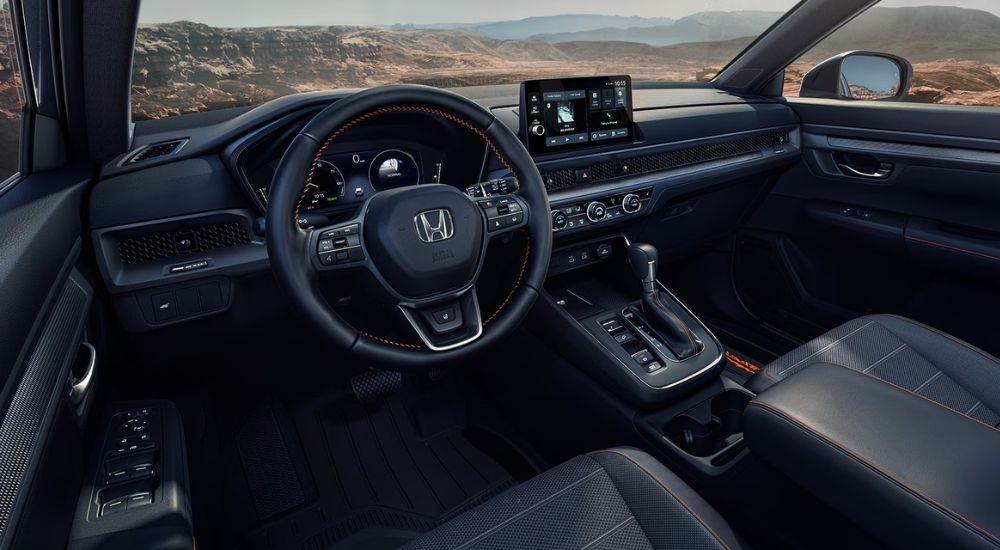
It all starts on the dashboard, where drivers will discover a standard nine-inch touchscreen infotainment display and a seven-inch digital instrument cluster. These features lend the CR-V a modern look and give it a significant advantage over the Rogue. Nissan’s own entry-level S trim has a smaller eight-inch display and sticks with a traditional analog gauge cluster that’s a bit lacking in customization options.
The differences between the two models don’t stop there. The CR-V LX also includes a number of surprisingly premium features that aren’t even available until you reach one of the Rogue’s top trims. The wireless charging pad is one good example, but the CR-V’s Apple CarPlay and Android Auto smartphone connectivity really drives the point home. While Nissan has reserved wireless versions for the high-end SL and Platinum trims, they come standard on every 2026 CR-V.
This trend continues throughout the rest of the trim ladder, with the CR-V outperforming the Rogue at almost every turn. From heated front seats and rear USB-C ports to an automatic climate control system, a remote engine starter, a power driver’s seat, and heated exterior mirrors, Nissan’s crossover simply can’t match the CR-V on a trim-by-trim basis.
Safety Technology
It’s easier to excuse the 2026 Rogue’s underwhelming approach when it comes to infotainment tech, but drivers tend to be a little less forgiving in terms of safety and driver assistance. It’s understandable, especially when you’re trying to keep your loved ones safe and enjoy a more confident driving experience, and it makes the CR-V tough to ignore for those seeking a new family vehicle.
The Honda Sensing system equips every 2026 CR-V with all the driver assistance features drivers have come to expect from a modern SUV, and then some. Adaptive cruise control, forward collision warning, automatic emergency braking, and automatic high beams might make headlines on another model, but they actually represent some of the CR-V's more basic driver assistance features.
The CR-V’s Traffic Jam Assist feature functions like an enhanced version of adaptive cruise control, which is sure to come in handy during rush hour. The Driver Attention Monitor addresses one of the biggest downsides of automation. While features like adaptive cruise control make driving easier, they can also lead to a lack of focus; the Driver Attention Monitor leverages the latest technology to track driving patterns and provide helpful alerts if it detects a drowsy or distracted operator.
Honda has also designed the 2026 CR-V with a unique Rear Seat Reminder feature that’s perfect for more forgetful motorists. If one of the rear doors is opened before the vehicle is put into drive, the CR-V provides a helpful reminder to check the backseat for cargo, pets, or particularly quiet children before exiting the vehicle.
The CR-V’s most impressive driver assistance feature would have to be the Traffic Sign Recognition system. Cameras have become commonplace on today’s vehicles, but this tool provides a lot more than your average rearview camera. The camera keeps track of passing signage and displays an icon on the dashboard so you never run afoul of the posted speed limit.
The Rogue’s own driver assistance suite is pretty pedestrian compared to the CR-V, covering most of the basics, with forward collision mitigation, lane departure warning, blind-spot warning, and rear parking sensors. Features like adaptive cruise control and lane keeping assistance don't even enter the picture until the SV trim level, so it can’t come close to matching some of the CR-V’s more innovative systems.
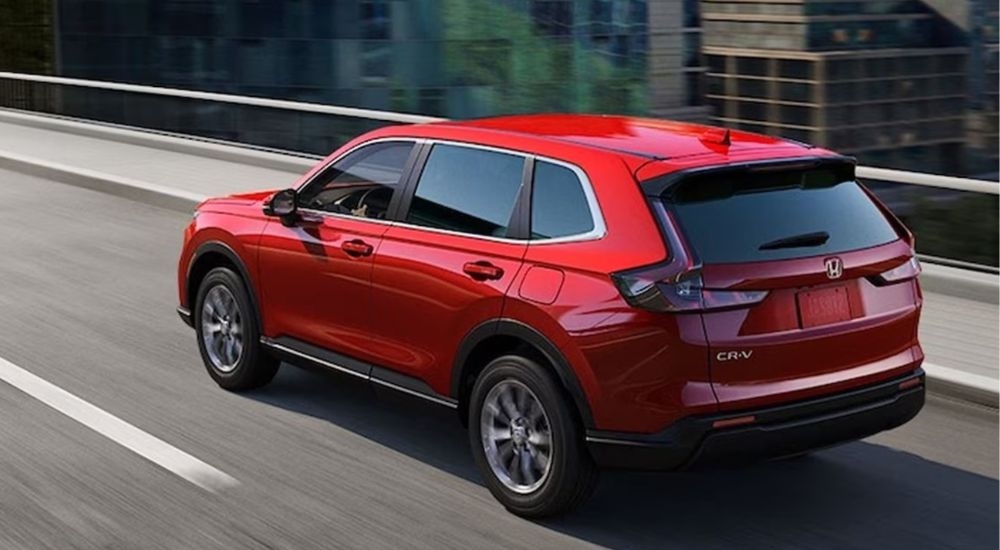
Get More for Your Money at Route 22 Honda
The 2026 Nissan Rogue represents a respectable take on the compact crossover formula, but at the end of the day, it’s simply no match for the 2026 Honda CR-V. While the Rogue offers a comfortable cabin, decent fuel economy, and a versatile interior, Honda’s SUV takes a more comprehensive approach that makes it tough to beat in terms of sheer value.
A spacious cabin and flexible cargo space make the CR-V ideal for today’s busy families, allowing owners to accommodate everything from passengers and luggage to bulky sports equipment and your weekly grocery haul. Its available hybrid powertrain is sure to make a difference at the gas pump, and an extensive suite of driver assistance features will help protect your most precious cargo.
Throw in a compelling base trim with a wide array of standard comfort, convenience, and tech features, and it’s easy to understand why so many customers show up at Route 22 Honda asking about the CR-V. If you’re a budget-conscious buyer who's ready to experience a great value regardless of your credit history, we’re here to help you get behind the wheel of a new 2026 CR-V.