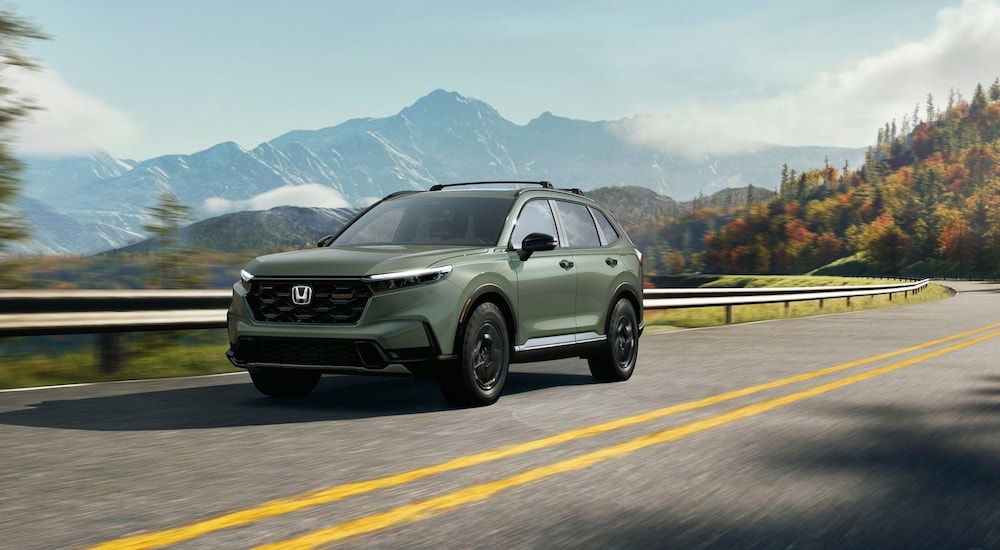
For years, SUVs have been the vehicle of choice for a wide range of drivers, meaning there are numerous options to consider when finding the best match for your daily driving routine. In the compact category in particular, the competition is fierce, with the 2026 Honda CR-V vs 2026 Toyota RAV4 front and center on many drivers' minds.
While both of these SUVs offer a blend of comfort, technology, and overall value, our team at Route 22 Honda believes the CR-V edges out the RAV4 in a few key areas, including delivering a better overall driving experience. However, we want to ensure you have the information you need to feel confident in your decision, which is why we've gathered the details for both the CR-V and RAV4 for you to consider.
We also encourage you to take a closer look at the 2026 Honda CR-V, either here on our website or in person, as well as schedule a test drive to get the full picture of what this model has to offer.
Exterior Design and Style
For the 2026 model year, the Honda CR-V retains its modern, aerodynamic look with a rugged yet refined profile. This look has been a constant since its most recent redesign for the 2023 model year. When looking at the CR-V, you will find that it offers a longer wheelbase and wider stance than some other compact SUVs. This gives it more stability and a sportier vibe, not to mention giving you and your passengers more interior space.
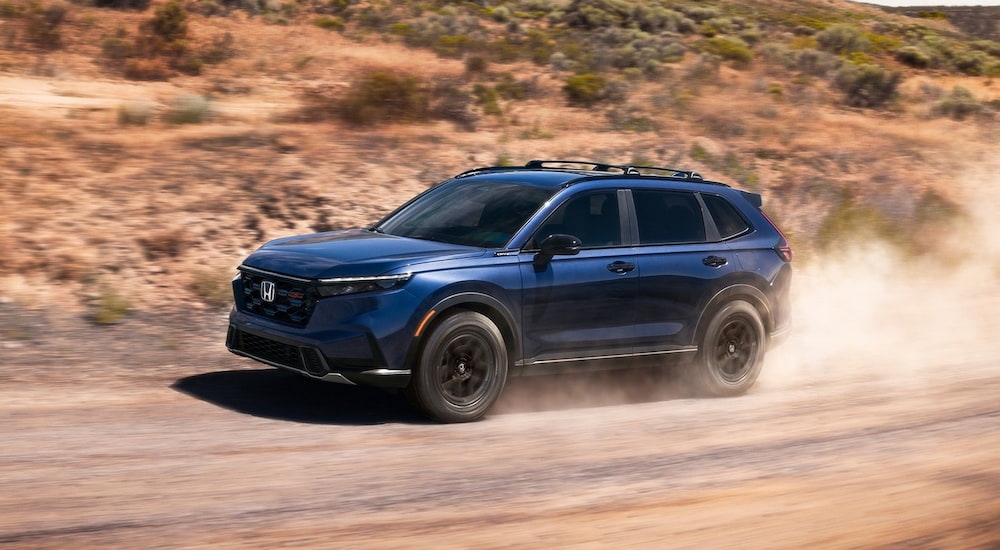
Some changes worth mentioning when it comes to design and style for the 2026 model year include sleek exterior touches such as a bold gloss-black grille and signature vertical LED taillights on certain trims. Additionally, for those with an adventurous spirit, the TrailSport Hybrid trim is well-equipped with all-terrain tires and rugged styling cues. In general, what you will find is that the CR-V's design balances athletic character with everyday versatility.
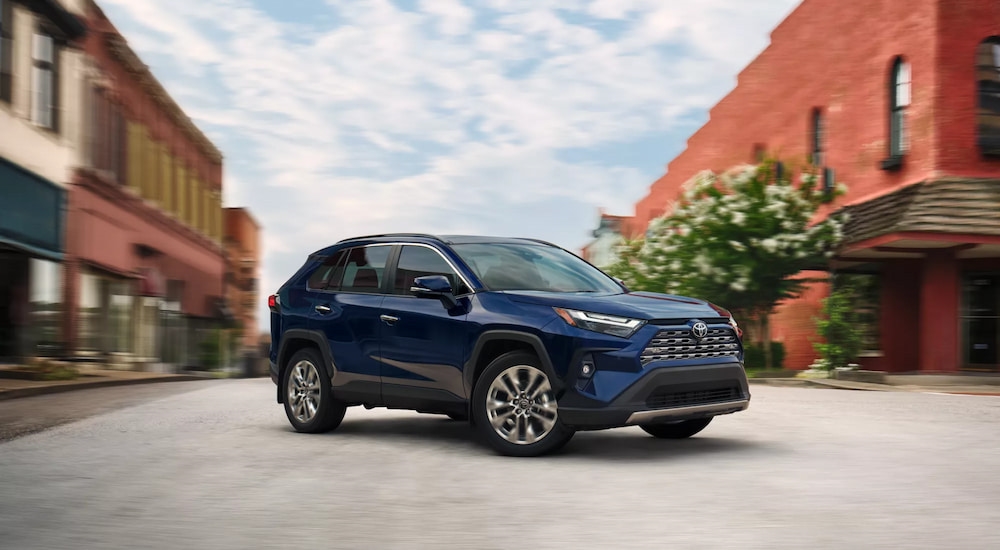
The Toyota RAV4 is brand-new this year, offering a more rugged, truck-like approach than previous versions. It also offers streamlined styles, each with its own unique features. You will also find that some trims, such as the GR Sport PHEV, have an aggressive focus that is performance-inspired.
Overall, the changes make the newest RAV4 bold and muscular, which can be appealing to outdoor enthusiasts. However, the CR-V's more well-rounded approach tends to attract a wider customer base, as it fits in wherever the road takes you.
Performance and Powertrain
It is worth noting that both Honda and Toyota have made impressive strides when it comes to sustainability, which is front and center when looking at the CR-V and the Toyota RAV4. The following is a closer look at how they stack up.
Honda CR-V
The CR-V has a 1.5L turbocharged four-cylinder engine that produces up to 190 hp and 179 lb-ft of torque. It is capable of towing up to 1,500 lbs, which is enough for a small travel camper or trailer. It's worth noting that this powertrain offers a smooth ride and responsive handling, not to mention that it doesn't require drivers to transition to a hybrid powertrain before they're ready. Instead, they can enjoy all the CR-V has to offer without having to explore the unknown.
If, however, you're ready to try something new, you can check out the 2.0L I-4 HEV. This two-motor hybrid offers up to 204 hp and 247 lb-ft of torque. Additionally, it is equipped with an e-CVT and is available in front-wheel or Real Time all-wheel drive. While the towing power for the hybrid version drops to 1,000 lbs, fuel efficiency increases to an EPA-estimated 43 MPG in the city and 36 MPG on the highway, which might be a trade-off you're willing to accept.[a]
Toyota RAV4
The first thing you will notice about the 2026 RAV4 is that it does not offer a gas-only powertrain. Instead, you can choose from a hybrid or plug-in hybrid model. For the former, you will find it is powered by a 2.5L I-4 HEV, while the latter is equipped with a 2.5L I-4 PHEV that is about the same but offers an all-electric range of 50 miles.
The fact that drivers can continue to choose an all-gas powertrain in the CR-V might very well be the deciding factor for many. Not only that, but the CR-V's history of dependability might prove a better investment than a brand-new HEV or PHEV design.
Driving Dynamics and Handling
At the end of the day, it doesn't truly matter what amenities the vehicle you choose offers. It's the driving dynamics and ride comfort that pull the most weight, particularly for those drivers who spend a lot of time behind the wheel. With this in mind, the CR-V is known for delivering a smooth ride and composed handling. This balance gives drivers confidence and ensures that each drive is just as enjoyable as the last.
Additionally, higher trims and all-wheel drive models offer enhanced traction control for better low-speed and off-road situations. Another note worth mentioning is the CR-V's well-insulated cabin. While this might not seem like that big of a deal, the truth is that it delivers a ride that is much quieter than other SUVs in its class. Add to that the visibility its design offers and its maneuverability in traffic and on tight streets, and it's easy to see why drivers from all walks of life feel relaxed behind the wheel.
The RAV4 also offers consistency and feels quite capable in off-road situations, but its on-road performance might not quite meet the standards that the CR-V has set. This is partly due to its ride height and boxy style, which produce a bit more roll when cornering. Additionally, tests have indicated that the engine can be loud when operating at maximum capacity, which might dull your driving enjoyment.
There are some highlights for the latest version of the RAV4, including the sharpened handling and impressive traction the top-tier GR Sport PHEV trim offers, but across the board, drivers might find the CR-V offers more consistency mile after mile.
Interior Comfort and Practicality
Whether you're typically traveling alone or with passengers in tow, comfort and practicality are key considerations when choosing the ideal vehicle. When comparing the CR-V and the RAV4, both offer generous space, but the CR-V edges out the RAV4 with 41 inches of rear legroom compared to 37.8 inches. It also offers more passenger volume at 103.5 cu.ft., while the RAV4 measures at 98.9 cu.ft.
When it comes to cargo space, the CR-V wins again, offering up to 76.5 cu.ft., while the RAV4 offers 63.6 to 70.4 cu.ft. Still, both SUVs offer easy expansion of cargo space thanks to their 60/40 split-fold rear seats.
A quick look at both SUVs shows that they each offer a long list of technological advancements, both in safety and connectivity. Additionally, while the CR-V has been praised for its driver-friendly layout, the RAV4 also delivers a user-friendly experience with a center stack that groups various functions together for streamlined accessibility.
In the end, it might be hard to differentiate between the two when it comes to the creature comforts they offer, but if space is a priority, the clear winner is the CR-V.
Check Out the 2026 Honda CR-V Today
If you are looking for a compact SUV, there are many options to consider, but our team at Route 22 Honda thinks the 2026 CR-V will meet all your needs and more. As mentioned, you can view our selection online or stop by the dealership for a closer look. Either way, we are excited to help you find the right match and answer any questions you might have.
Take the first step today to see if the 2026 Honda CR-V is right for you.
[a] Based on 2026 EPA mileage ratings. Use for comparison purposes only. Your mileage will vary depending on driving conditions, how you drive and maintain your vehicle, battery package/condition, and other factors.