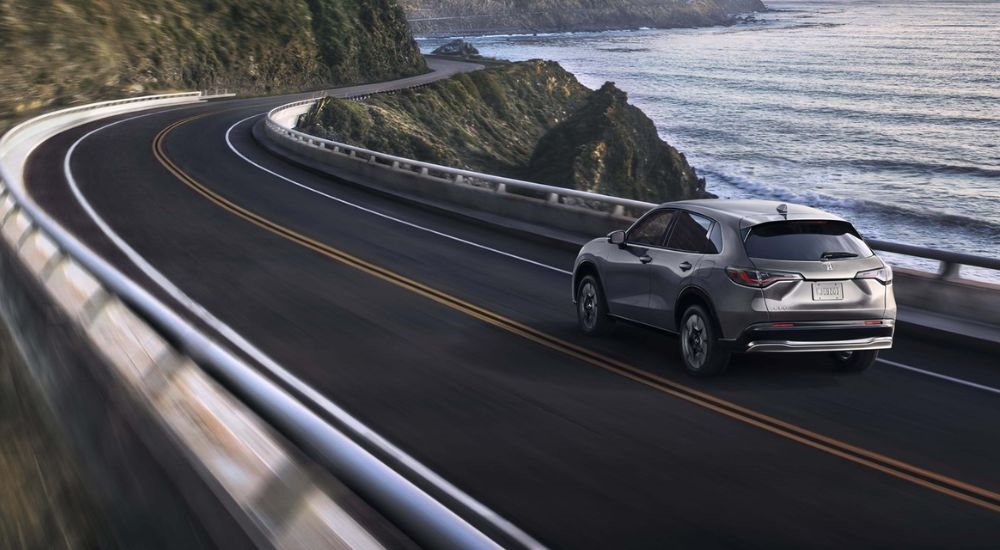
 Choosing the right subcompact crossover forces shoppers to compare the features they need most. We often talk to buyers who are looking at a 2027 Honda HR-V vs 2027 Mazda CX-30 to see which model is the best fit. When you break down these two models, it becomes clear that the latest Honda HR-V offers a superior blend of passenger room, cargo flexibility, and overall value.
While the 2027 Honda HR-V has been officially released, full details for the 2027 Mazda CX-30 are not yet available. Recently, Mazda announced that a full redesign for the CX-30 has been pushed back until at least 2031. Because of this, we will use the current 2026 CX-30 as our baseline to discuss what you might expect for the Mazda model's upcoming iteration, given that not much is expected to change.
An Overview of the Main Advantages
Here is a quick look at the primary advantages the 2027 Honda HR-V brings to the table:
- Greater Passenger Volume: Provides 98.7 cubic feet of total passenger space compared to the CX-30’s 94.1 cubic feet, offering more breathing room for all occupants.
- More Rear-Seat Legroom: Delivers 37.7 inches of rear legroom versus 36.3 inches in the CX-30.
- Superior Cargo Capacity: Offers 24.4 cubic feet of storage behind the rear seats and expands to 55.1 cubic feet with these seats folded, easily beating the CX-30’s 20.2 and 45.2 cubic feet, respectively.
- Intuitive Media Controls: Offers a responsive touchscreen interface that's nine inches wide, avoiding the rotary dial required to navigate the CX-30's display.
- Extended Driving Range: Equipped with a 14-gallon fuel tank compared to the CX-30’s 12.7-gallon capacity, reducing the frequency of gas station stops on road trips.
Cabin Comfort & Spaciousness
When you spend a significant amount of time commuting with multiple passengers or running errands, interior comfort becomes a top priority. The 2027 Honda HR-V provides a generous 98.7 cubic feet of total passenger volume, giving everyone plenty of room to stretch out. By comparison, the 2027 Mazda CX-30 is expected to carry over its 94.1 cubic feet of passenger space based on the previous model year.
Rear-seat passengers will especially appreciate the legroom the Honda HR-V provides. The 2027 HR-V offers 37.7 inches of rear legroom. If the 2027 CX-30 retains the outgoing year’s interior dimensions, it will provide 36.3 inches of rear legroom. That extra space in the Honda helps taller adults ride more comfortably and makes installing rear-facing child seats much easier.
Cargo Utility for Everyday Life
Another primary reason drivers choose a crossover SUV is the added utility and cargo flexibility over a traditional sedan. The 2027 Honda HR-V excels here, offering 24.4 cubic feet of space behind the second row. According to specifications from 2026, the Mazda CX-30 offers just 20.2 cubic feet of cargo space behind its rear seats.
When you need to transport bulkier items, maximum cargo capacity becomes a crucial factor. Folding down the rear seats in the 2027 Honda HR-V opens up a massive 55.1 cubic feet of total storage space. The Mazda CX-30 will likely carry over its maximum capacity of 45.2 cubic feet, given that the brand says it won't be giving its subcompact a major structural redesign. This makes Honda the clear choice if cargo space is a key concern.
Technology & Connectivity
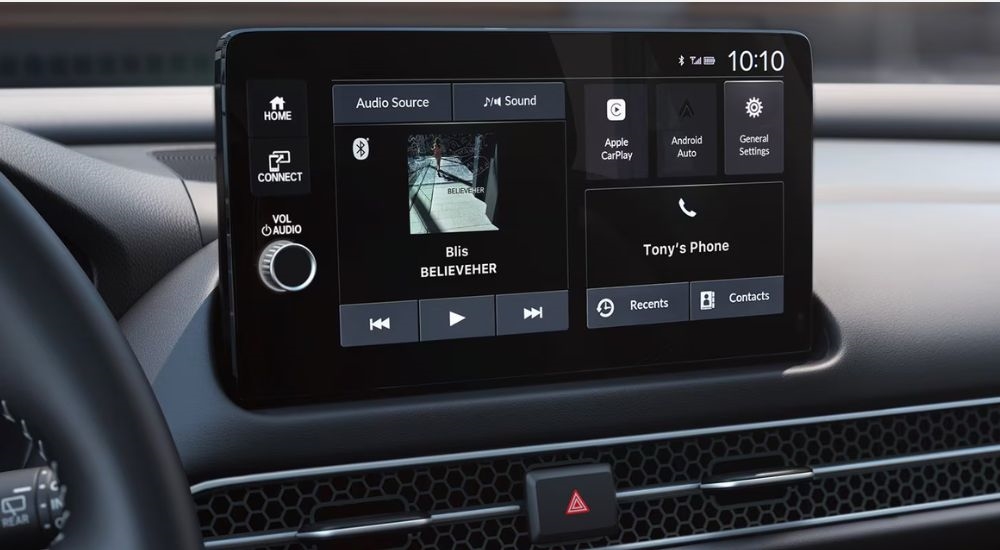
The 2027 Honda HR-V offers a nine-inch color touchscreen display that sits high on the dashboard for easy viewing. The Mazda CX-30 uses an 8.8-inch display or, on some trims, a 10.25-inch display that relies on a rotary dial to control rather than direct touch inputs. Many drivers find Honda's responsive touchscreen setup much easier to operate while keeping their focus on the road ahead.
These days, smartphone integration is a must in any vehicle for navigation, music streaming, and hands-free calls. While both models offer this, the 2027 Honda HR-V includes wireless Apple CarPlay and Android Auto compatibility across all trim levels.
On the 2026 Mazda CX-30, the base trim provides only wired smartphone integration, requiring buyers to step up to more expensive trim levels to get wireless connectivity. This tiered packaging should carry over into the 2027 model year, making the HR-V more attractive to shoppers who value wireless connectivity.
Powering Your Devices
To complement its wireless smartphone integration, the 2027 HR-V comes standard with a wireless phone charger across the entire trim lineup. This lets you keep your battery topped without tangled cords cluttering your center console.
In contrast, the 2026 Mazda CX-30 did not include a wireless phone charger on its base trim. Buyers looking for this simple convenience may be forced to step up to a more expensive trim in 2027 to get the same utility that Honda includes from the start.
When it comes to functional utility for weekend trips, the HR-V steps up with a 12-volt power outlet conveniently located right in the rear cargo area. This outlet is perfect for plugging in an air pump to inflate sporting equipment, running a portable cooler for tailgating, or powering a small car vacuum. The Mazda CX-30 completely misses the mark here, failing to offer a 12-volt outlet on any of its trims.
The Cabin's Quietness
A peaceful cabin transforms a noisy highway commute into a relaxing drive. The 2027 HR-V makes computer-generated Active Noise Cancellation (ANC) standard across the trim lineup to counteract low-frequency engine and road-rumble noise. By using interior microphones and emitting opposing sound frequencies through the speakers, Honda's system keeps the HR-V's cabin remarkably quiet.
Mazda does not offer an active noise cancellation system on the 2026 CX-30, and this omission will likely continue for the 2027 model year.
Fuel Efficiency & Range
The latest HR-V also has an edge in fuel efficiency and range. The front-wheel-drive 2027 HR-V delivers an EPA-estimated 26 MPG in the city, 32 MPG on the highway, and 28 MPG combined.[a]
By comparison, the 2026 Mazda CX-30 (with its standard all-wheel-drive setup) offers an EPA-estimated 24 MPG in the city, 31 MPG on the highway, and 27 MPG combined. While both models are efficient, the Honda HR-V is the better choice for drivers who prioritize maximum fuel economy on their daily commute.
Fuel tank capacity also dictates how far you can travel between fuel stops. The 2027 Honda HR-V has a generous 14-gallon fuel tank that maximizes driving range. The 2026 Mazda CX-30 utilizes a notably smaller 12.7-gallon fuel tank, which is expected to carry over unchanged. That extra capacity in the Honda makes longer road trips much more convenient by reducing the frequency of your pit stops.
Final Thoughts on This Crossover Comparison
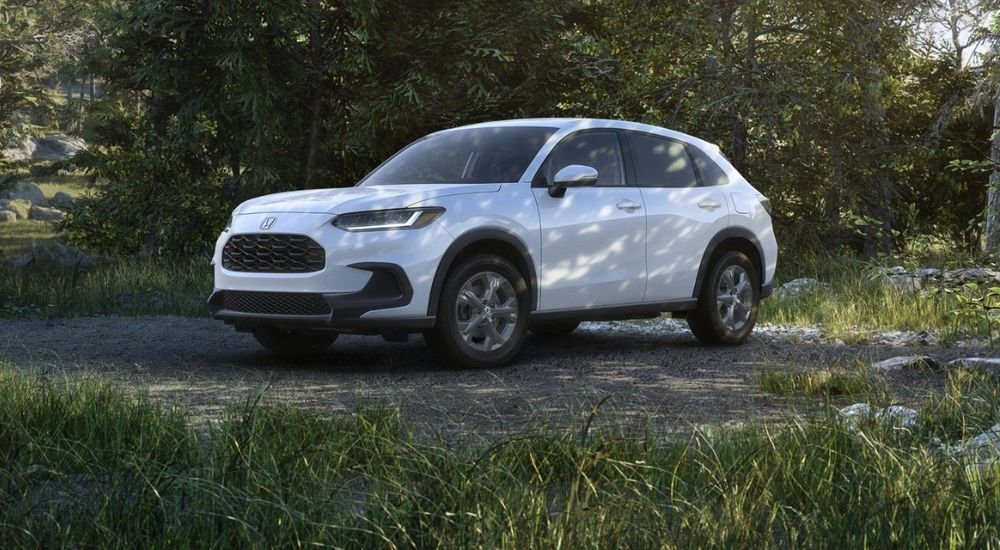
Choosing between these two subcompact SUVs ultimately comes down to which model best supports your daily lifestyle. The 2027 Honda HR-V delivers in the areas that matter most to families, commuters, and weekend adventurers. The practical advantages of the Honda make it a remarkably versatile vehicle for a wide range of driving scenarios.
As you finalize your research, it is important to remember the current information gap regarding the competition. Mazda's details were preliminary and may change once the 2027 CX-30 is officially announced. In the meantime, the 2027 Honda HR-V is already available, and you can test-drive it today!